Zoos Could Be a Zone for High Impact Soundscape Research
Experts call for greater collaboration between bioacoustics researchers and zoos to boost impact and aid conservation
Complete the form below to unlock access to ALL audio articles.
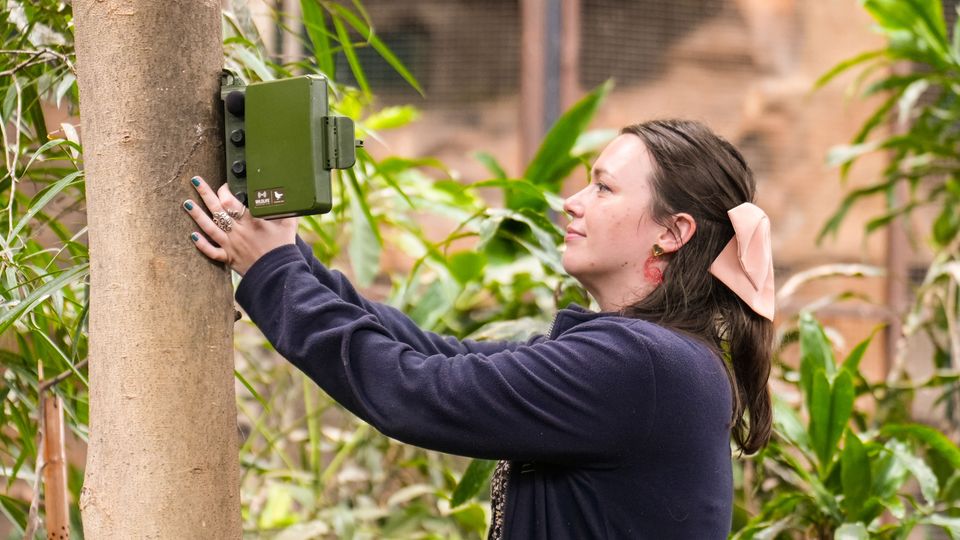
A new study suggests that zoos are an untapped resource for scientists working in the field of sound. The authors are calling for closer collaboration between scientists and the zoo community in hopes that future research could benefit animals and deepen our understanding of the natural world. This study, conducted by Chester Zoo, UK, was published in Bioacoustics.
Understanding who listens to what and where
There are several research areas where acoustic research could be incorporated into zoo practice and conservation, including animal behavior and welfare, enrichment and animal vocal communication. However, it was not, until now, clear what direction zoo bioacoustics studies were taking – or even what volume of research was taking place. This work was undertaken to identify gaps in current zoo-based bioacoustics practice, to provide an overview to zoo industry professionals interested in bioacoustics research and to encourage practitioners in the field of acoustics to consider zoos as sites of scientific enquiry.
What the science says about sound in zoos
The authors examined 183 bioacoustics studies to create an overview of the field. The study looked at more than 30 years of bioacoustics work covering aspects of animal communication, human health and well-being, technical aspects of sound detection and measurement and multiple methodologies to evaluate zoo soundscapes.
The key findings of the paper are:
- Visitor noise is the most researched aspect of sounds in zoos.
- Zoo bioacoustics impact studies most often focus on non-human primates, with relatively few sound studies focusing on birds, reptiles, amphibians and fish.
- Consistent noise, such as noise from generators, heating, ventilation and air conditioning (HVAC) systems and aquarium filtration systems, is less studied than acute noise, like the sound generated by after-hours events or short-term construction projects.
- More research is needed into how environmental noise affects the way animals communicate and behave.
A small but complex field
Dr. Leah Williams, co-author and lead conservation scientist in population biology at Chester Zoo, said: “When it comes to research into zoo environments, a lot of studies focus on the physical environment, in terms of both animals and visitors, perhaps because other dimensions of the environment are less visible and obvious.”
“Within the work that does shed light on zoo bioacoustics, there are gaps that could be addressed. For instance, there is some evidence, though it is currently scant, that visitor immersion within zoo soundscapes has a positive impact on human psychological welfare. This, we think, deserves more study, as do other areas like the impact of consistent noise on animal inhabitants of zoos and soundscapes around multiple species. We hope this work will encourage more investigation into these areas.”
“The issue many zoos face is that they don’t have the capacity to carry out their own bioacoustics surveys. It’s a complex field and requires technical expertise and access to specialized equipment. We’re lucky at Chester Zoo to have team members who have that expertise. We want to encourage zoos to reach out to researchers and researchers to reach out to zoos.”
This snapshot into the current state of zoo-based bioacoustics reveals under-researched areas and the constraints that have led to these gaps.
It is possible that zoos may be undertaking bioacoustics research that does not appear in peer reviewed publications. As the study draws exclusively on peer reviewed journal articles and book chapters, it is important to note that it omits bioacoustics work that does not fall within this body of published work.
Closer collaboration between researchers and zoos offers a way forward
Dr. Rebecca Lewis, conservation scientist in population biology at Chester Zoo, said: “We want to encourage collaboration with bioacousticians, to facilitate work that’s of scientific interest to the bioacoustics community, has conservation value and is helpful to the zoo community. There’s a lot of work out there on wild sound, as well as bioacoustics studies that focus on domesticated animals and carried out in lab settings. Zoos offer another avenue for impactful research.”
“Future studies have the potential to shape zoo habitat design, influence conservation practice or unearth other data with practical applications,” commented Williams.
Reference: Lewis RN, Williams LJ. Hullabaloo at the zoo: Aligning acoustic research with the goals of the conservation zoo. Bioacoustics. 0(0):1-27. doi:10.1080/09524622.2025.2522470

Have you recently published research?
You can raise awareness of your work with an article like this too.